Umoya Legacy

Recipe Swap Column

The Recipe Swap Column and Where Its Dishes Come From

Reader submissions, family measurements and the notes in the margins

The recipe swap has quietly become one of the most read pages in the paper, and the reason is simple: the submissions are not polished. They arrive handwritten on the back of an envelope, photographed from a stained index card, or typed out with the original quantities left in cups and spoonfuls. A reader in Durban sends a fish curry. A reader in Pretoria sends a milk tart. Neither arrives with a neat list of grams.

Editing them for print means holding two things at once. The voice stays: the way a grandmother wrote "a good pinch" or "until it looks right" is part of the recipe. But the method has to be followable for someone cooking it for the first time, so the quantities get a plain-language note beside them and the steps get ordered. Nothing is rewritten into a different dish.

Not every submission runs in the next issue. Some are held back because the season is wrong, or because two recipes overlap too closely, or because a measurement needs a quick email back to the reader before it can be printed honestly. The notes in the margins are often the best part, and they are kept.

Handwritten recipe cards and a small notebook laid out on a wooden kitchen table
Recipe cards and a notebook, the way most submissions arrive.

What readers tend to send when the season turns

Winter brings soups, slow-baked puddings and the heavy breads that take a whole afternoon. Summer brings salads, cold set desserts and anything that uses up a glut of tomatoes or stone fruit. When a cold front moves through the interior, the swap column fills with the same three or four dishes from different kitchens, each with its own variation.

If you want to send one in, a little detail goes a long way: the town or province it comes from, roughly how many it feeds, and a note on where the recipe originally came from. A photograph of the handwritten card is welcome, and so is a plain typed version. Submissions can go by post or email, and community groups can send listings for the print run or the weekly email digest.

The Recipe Swap Column and Where Its Dishes Come From

The swap column rarely sits alone in an issue. A dish sent in from Durban or Pretoria usually arrives with a note about a club, a walk or a house being cleared, and those threads lead back into the rest of the paper.

Reader submissions

Where the dishes actually come from

A fish curry from a reader in Durban, a milk tart typed out in Pretoria, a handwritten card with a measurement that only made sense to the person who wrote it. The column keeps the original voice and only tidies the method so someone cooking it for the first time can follow along.

Browse the full archive of columns

Walking groups

The Saturday route that feeds the letters page

Half the notes that reach the swap column start with a walk. Someone mentions the group they joined, the pace they settled into, and the flask of soup waiting at the end. That is usually where a recipe gets sent in.

Read what a walking group asks of you

Households

The recipe box at the back of the cupboard

Clearing a family house turns up more than furniture. Recipe cards, duplicate copies of the same dish, and notes in the margins often surface in the same box, and readers send them in once the sorting is done.

See the room-by-room downsizing column

Submissions for the swap column are welcome by post or email, and community groups can send listings for the next print run or the weekly email digest. A short line on where a dish came from is often the part readers remember longest.

The Recipe Swap Column and Where Its Dishes Come From

A recipe reaches the column in whatever shape it left the kitchen. Handwritten on a card, typed out in a hurry, photographed from a notebook with the original cups and spoonfuls still in place. What makes a submission usable is not neat handwriting. It is enough detail that someone cooking the dish for the first time can follow it without guessing.

Send the ingredients as you actually measure them, the order you cook them in, and a line on where the recipe came from. A name, a town, a grandmother, a neighbour who moved away. Those notes in the margin are often the part readers remember.

Letters, club listings, classifieds and obituary notices go to the same place. If you are unsure which section fits, describe what you have and it can be routed from there.

What to include

  • Your name and the town or province the recipe comes from.
  • Ingredients in the measures you use at home, not converted ones.
  • The method in the order you cook it, including the small steps.
  • A short note on where the dish came from, if there is one.
Send your submission

The Recipe Swap Column and Where Its Dishes Come From

The column is put together by the same editorial team that assembles the rest of Umoya Legacy, working from submissions that arrive by post and by email. There is no test kitchen and no separate food desk. A recipe is read the way a reader would read it, cooked once if the method is unclear, and then set for print with the original wording kept wherever it still makes sense.

That means a line like "butter the size of a walnut" stays as written, with a short note underneath for anyone who has never met that instruction before. A measurement in a chipped enamel cup is translated into millilitres only when the contributor agrees. Names stay attached to the dish: a reader in Durban sends a fish curry, a reader in Pretoria sends a milk tart, and both are printed with the town and the person who sent them.

Submissions that need more detail are held back rather than guessed at. If a method skips a step or a quantity is missing, the contributor is asked before the recipe runs, which is why some dishes appear a few issues later than expected. The column belongs to the readers who fill it, and the editing is only there to make a family recipe followable for someone cooking it for the first time.

The Recipe Swap Column and Where Its Dishes Come From

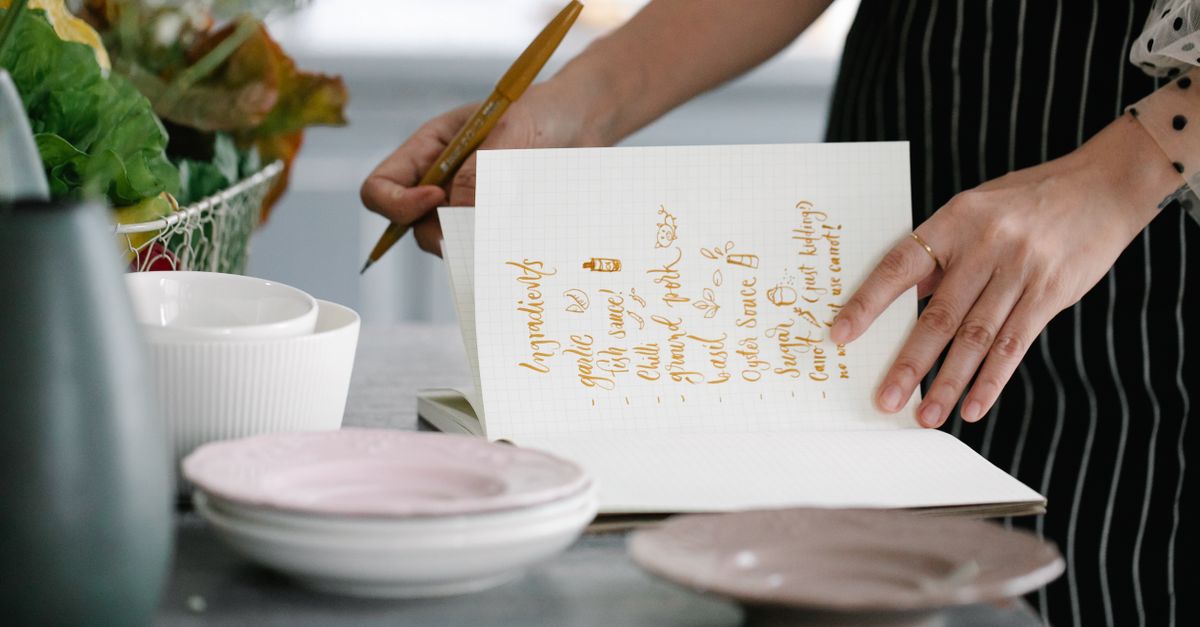
A few frames from the submissions tray, the kitchen table and the print run.

Handwritten recipe cards and a small notebook laid out on a wooden kitchen table

Submissions tray

Cards arrive in pencil, in blue ink, sometimes with a coffee ring near the sugar line. The margin notes are usually the part readers ask about first.

A small open notebook and loose recipe cards arranged on a wooden surface

Editing desk

A cup of flour, a spoon of syrup, "enough" for the liquid. We keep the phrasing and add a plain measure beside it so a first attempt still works.

Recipe cards and a notebook resting on a wooden kitchen table in daylight

Print run

Each printed recipe carries a line on where it came from: the town, the reader's name, and the season it tends to show up in.

Some dishes wait a fortnight or two before they run. A fish curry from Durban reads better in a cooler month; a milk tart from Pretoria sits well beside a letters page about a Sunday visit. When a season turns, the tray fills with the same handful of family dishes, sent in by different readers with slightly different measurements.